From Academy to England Squad - Which Clubs Academies Are On The Rise
Which Clubs Provide The Most Future England Players
Man Utd not providing as many England players as 10 years ago.

Photo: The Athletic
Liverpool lead the academy count in Thomas Tuchel’s latest announced England men’s squad, with three players, while Manchester United’s contribution has fallen from five to one compared with ten years earlier. The 25 players selected in November 2026 trace back to 20 primary academy or development clubs, against 17 in November 2016. All 27 clubs represented in either original squad are shown.
The 2026 squad: Liverpool lead, with three clubs on two
Liverpool — 3: Trent Alexander-Arnold ; Jarell Quansah ; Rio Ngumoha .
Birmingham City — 2: Jobe Bellingham ; Jude Bellingham .
Chelsea — 2: Marc Guéhi ; Lewis Hall .
Middlesbrough — 2: Jason Steele ; Djed Spence . Spence progressed through Boro’s under-23s after leaving Fulham.
Arsenal — 1: Myles Lewis-Skelly .
Brighton & Hove Albion — 1: Ben White . White previously spent his schoolboy academy years at Southampton.
Carlisle United — 1: Jarrad Branthwaite .
Charlton Athletic — 1: Ezri Konsa .
Everton — 1: Anthony Gordon . Gordon previously spent time in Liverpool’s academy.
Fulham — 1: Josh King .
Manchester City — 1: James Trafford . Trafford’s earlier youth pathway included Cockermouth and Carlisle United.
Manchester United — 1: James Garner .
Newcastle United — 1: Elliot Anderson .
Queens Park Rangers — 1: Eberechi Eze . The credit includes QPR’s under-23 development set-up.
Sheffield United — 1: Dominic Calvert-Lewin .
Sunderland — 1: Jordan Pickford .
Tottenham Hotspur — 1: Harry Kane .
West Bromwich Albion — 1: Morgan Rogers .
West Ham United — 1: Declan Rice .
Wolverhampton Wanderers — 1: Morgan Gibbs-White .
The 2016 squad: Manchester United’s five set the pace
Manchester United — 5: Tom Heaton ; Michael Keane ; Danny Drinkwater ; Jesse Lingard ; Marcus Rashford .
Tottenham Hotspur — 3: Danny Rose ; Andros Townsend ; Harry Kane .
Sheffield United — 2: Phil Jagielka ; Kyle Walker .
Southampton — 2: Adam Lallana ; Theo Walcott .
Arsenal — 1: Jack Wilshere . Wilshere previously played in Luton Town’s youth programme.
Aston Villa — 1: Gary Cahill .
Barnsley — 1: John Stones .
Chelsea — 1: Ryan Bertrand .
Crystal Palace — 1: Nathaniel Clyne . Clyne joined Palace after being released by Tottenham.
Everton — 1: Wayne Rooney .
Liverpool — 1: Raheem Sterling .
Manchester City — 1: Daniel Sturridge . Sturridge’s earlier youth clubs included Aston Villa and Coventry City.
Newcastle United — 1: Fraser Forster .
Sheffield Wednesday — 1: Jamie Vardy . A last-formal-academy exception, not a Wednesday senior graduate; see below.
Shrewsbury Town — 1: Joe Hart .
Sporting CP — 1: Eric Dier . Dier also spent a youth-team loan at Everton.
Sunderland — 1: Jordan Henderson .
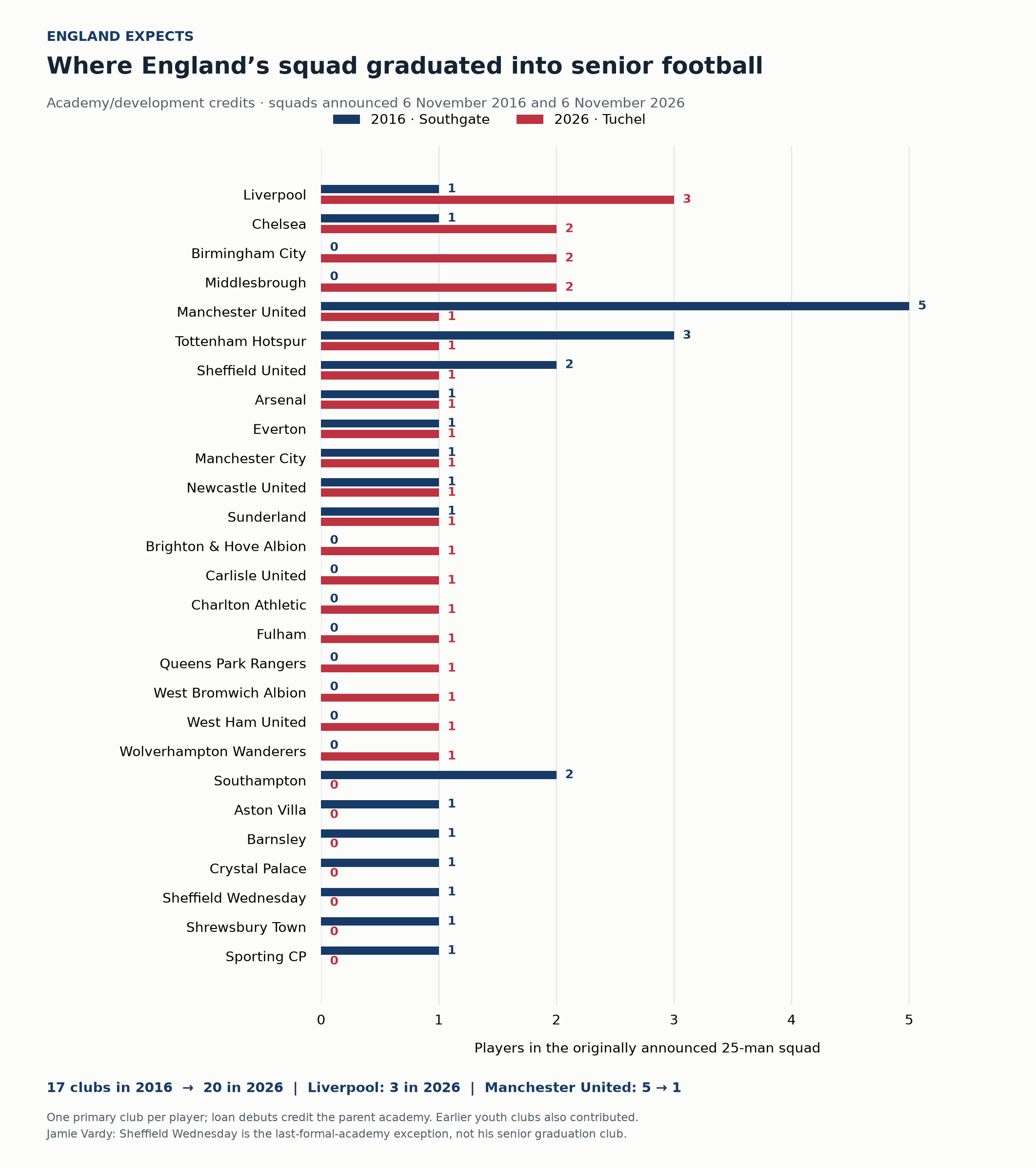
The comparison uses the originally announced 25-man squads: Tuchel’s selection on 6 November 2026 for Croatia and Spain, and Gareth Southgate’s selection on 6 November 2016 for Scotland and Spain. It does not substitute starting line-ups, matchday squads or later injury replacements.
Each player receives one primary credit: the club academy or youth/development set-up from which he entered competitive senior club football. A debut on loan credits the parent academy, not the loan destination. If a club recruited him directly as a senior player, the fallback is his final academy before that move. Earlier youth clubs are acknowledged rather than counted twice. This measures one stage of a player’s pathway, not sole responsibility for his development; Jamie Vardy is a flagged last-formal-academy exception.
More clubs represented, fewer players concentrated at the top
So what do these changes tell us? The strongest change is at Manchester United: five primary academy players representing England in 2016 becoming one in 2026, a fall of four. Liverpool rose from one to three. Birmingham City and Middlesbrough each rise from none to two; the Bellingham brothers give Birmingham its pair, while Steele and Spence give Middlesbrough two distinct development routes. Tottenham fell from three to one, Southampton from two to none, and Sheffield United from two to one.
The spread is broader in the latest announcement. There are 16 clubs represented by a single player, compared with 13 in 2016. The four highest-count clubs supplied 12 of the 25 players in 2016 — 48% — but 9 in 2026, or 36%. That is a 12-percentage-point fall in concentration. The leading club’s share drops from 20% to 12%.
Ten clubs appear in both counts. Another 10 appear only in 2026, while 7 appear only in 2016. Those are changes between two selections, not evidence that an academy has begun or stopped producing internationals. Harry Kane is the only player common to the two named squads.
Why a single academy credit cannot tell the whole story
Chelsea helped develop Declan Rice from seven until his release at 14, but West Ham received his graduation credit. Rio Ngumoha spent eight formative years at Chelsea before moving to Liverpool in September 2024 and making his senior debut there the following January. Ben White spent his early academy years at Southampton before being released at 16 and progressing through Brighton’s development teams. Raheem Sterling spent about six years at QPR before joining Liverpool’s academy at 15. Their earlier clubs are part of the story even when they do not receive the primary count.
Eberechi Eze’s route included Arsenal, Fulham and Millwall, plus a Reading trial rather than a contracted academy spell, before QPR’s development set-up led him into senior football. Djed Spence similarly had substantial Fulham youth development before joining Middlesbrough’s under-23s. Counting QPR and Middlesbrough is consistent with this rule; presenting either as the sole creator of the player would not be.
Danny Rose is counted for Tottenham, not his earlier academy Leeds United. Tottenham’s contemporary account places him in its academy and reserves alongside his first senior loan at Watford in 2009, so the parent-academy rule applies. Andros Townsend also played senior football on loan before his Tottenham first-team debut; his primary credit remains Spurs. Distinguishing a player’s first senior football from his first appearance for his parent club matters.
Vardy is the awkward exception. Sheffield Wednesday are credited as his last documented professional academy under the fallback rule, not as the club from which he graduated into senior football. After his release, he played for Wickersley Youth and joined Stocksbridge Park Steels, his first senior club. The evidence does not establish a formal Stocksbridge academy/development programme. Wednesday’s single credit is therefore a classification choice, and must not obscure the intervening youth football and non-league pathway that shaped his career.
Keep reading
Read next
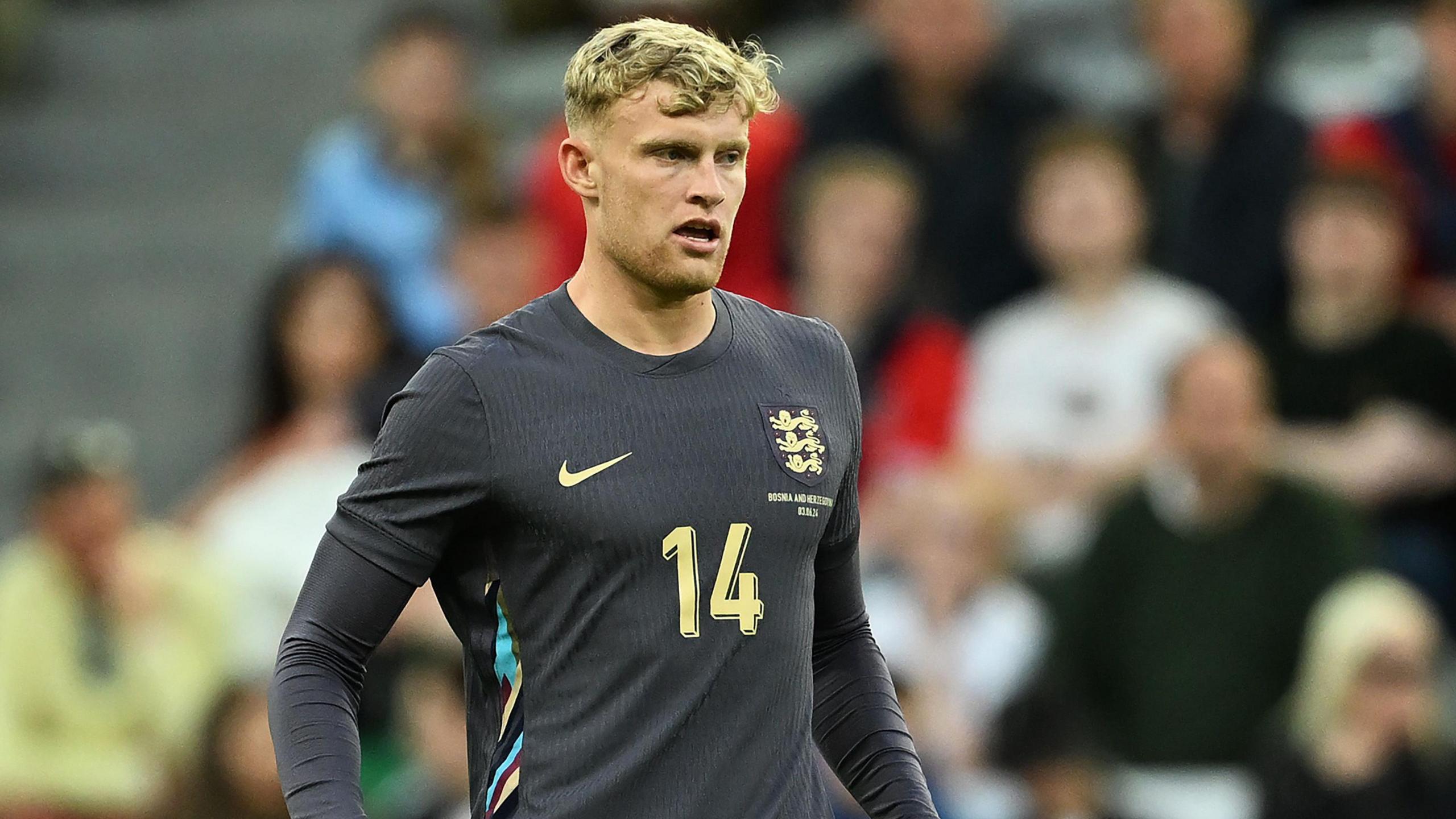
Jarrad Braithwaite - Needs More England Minutes
Central Defence - England's Selection Dilemma
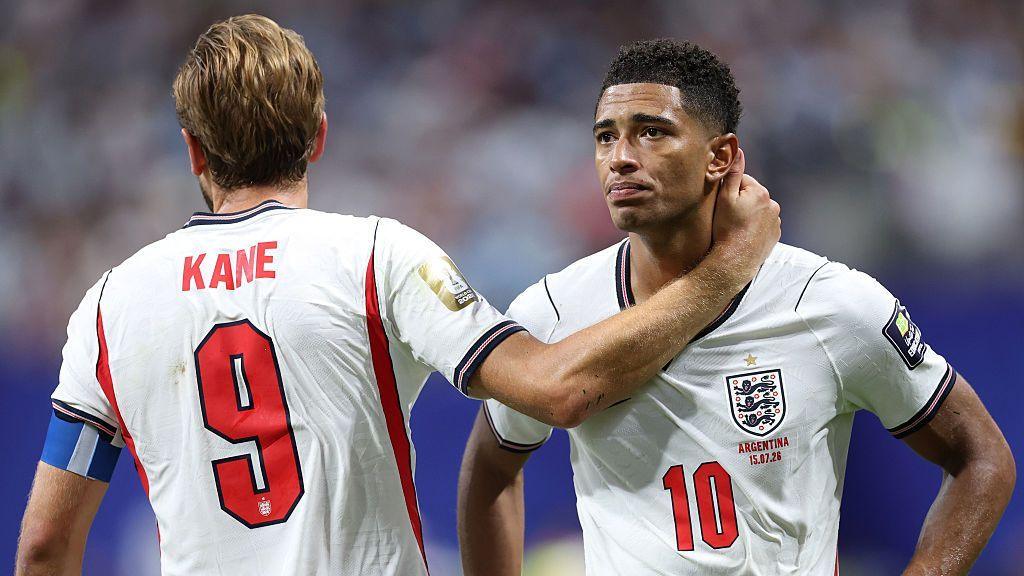
England Men · Squad Announcement
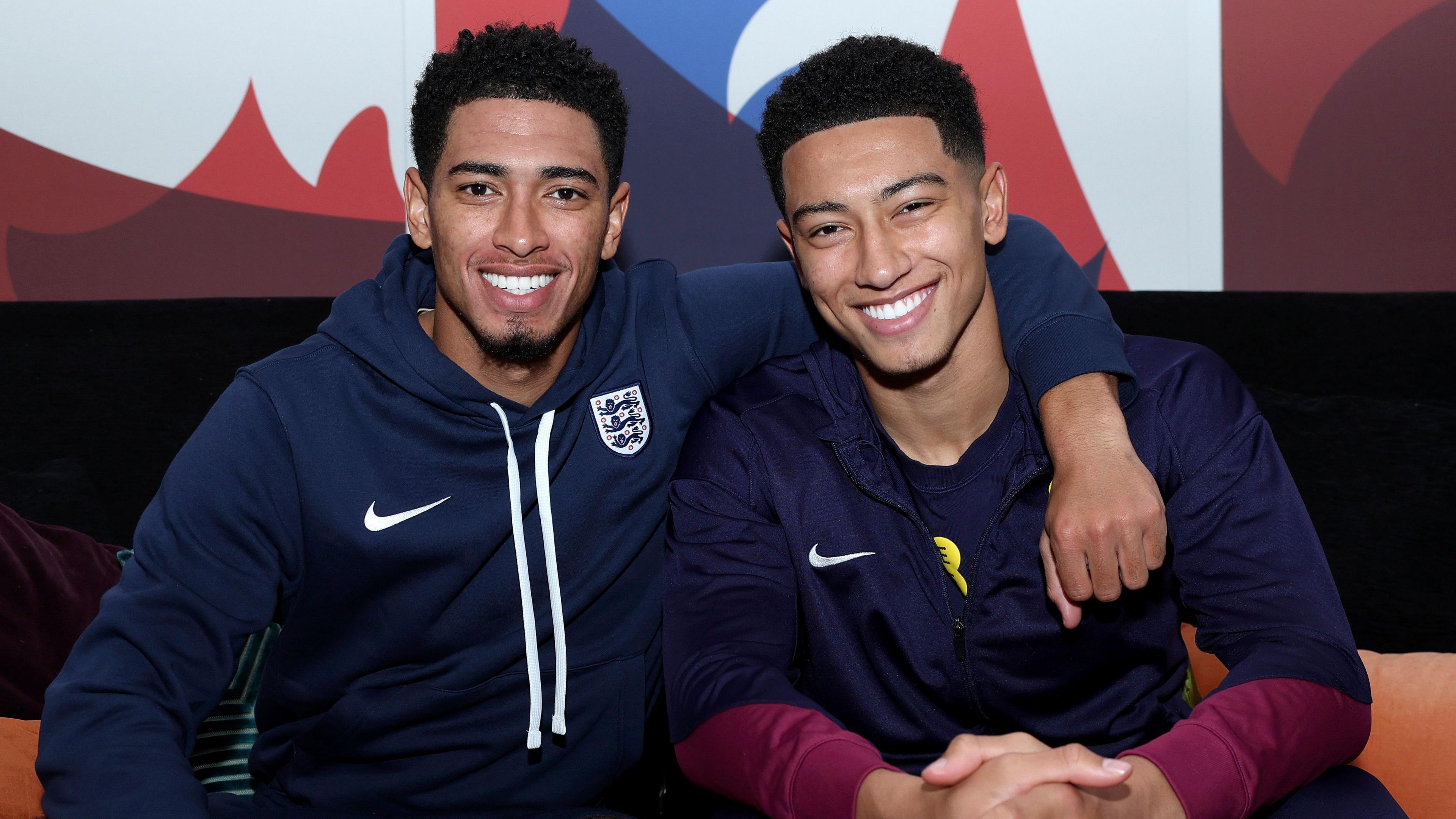
Bellingham Brothers in England Squad as Palmer and Foden Miss Out